
It’s been another busy day here at Nakedly Fresh, but at least we’re having a cool front so the temps are only in the mid-90s. My left arm surgery is in less than 13 hours, so I’ve been scrambling around to do as much as I can today. First priority was to mow the acreage…done! It’s been so hot that many of my natural botanicals are literally burning up and dying. 😥
I’ve been keeping an eye on all my Mullein plants and have already harvested all the 1st year’s leaves and the 2nd year’s flowers and stalks that I want (saving some seeds, of course). I was hoping to wait until the cooler weather of fall to harvest some of the 1st year’s roots, but they are quickly wilting and dying off. After I recoup from my left arm surgery, I have to get my right arm done. Yep, both arms, and both at the elbow and wrist. So with all of that in mind, I decided to go ahead and harvest some of the roots while the plant is still alive and while I have use of both arms/hands.
I have Mullein plants in a few different areas on my property, but there’s about 15 plants that are outside of my fence and yet still on my property. They are in an inconvenient place, so I opted to harvest those roots rather than deal with them next year. Time to grab the shovel and my harvest basket, so let’s get started…

When harvesting for Mullein roots, it’s typically better to get 1st year roots in the fall, or 2nd year roots in the spring. I prefer to let my 2nd year Mullein go to flower, so I’m selectively getting 1st year roots. First, I use a shovel to dig all around the plant base to loosen the soil, being careful to not cut into the root system. This is where a hand-shovel really helps!
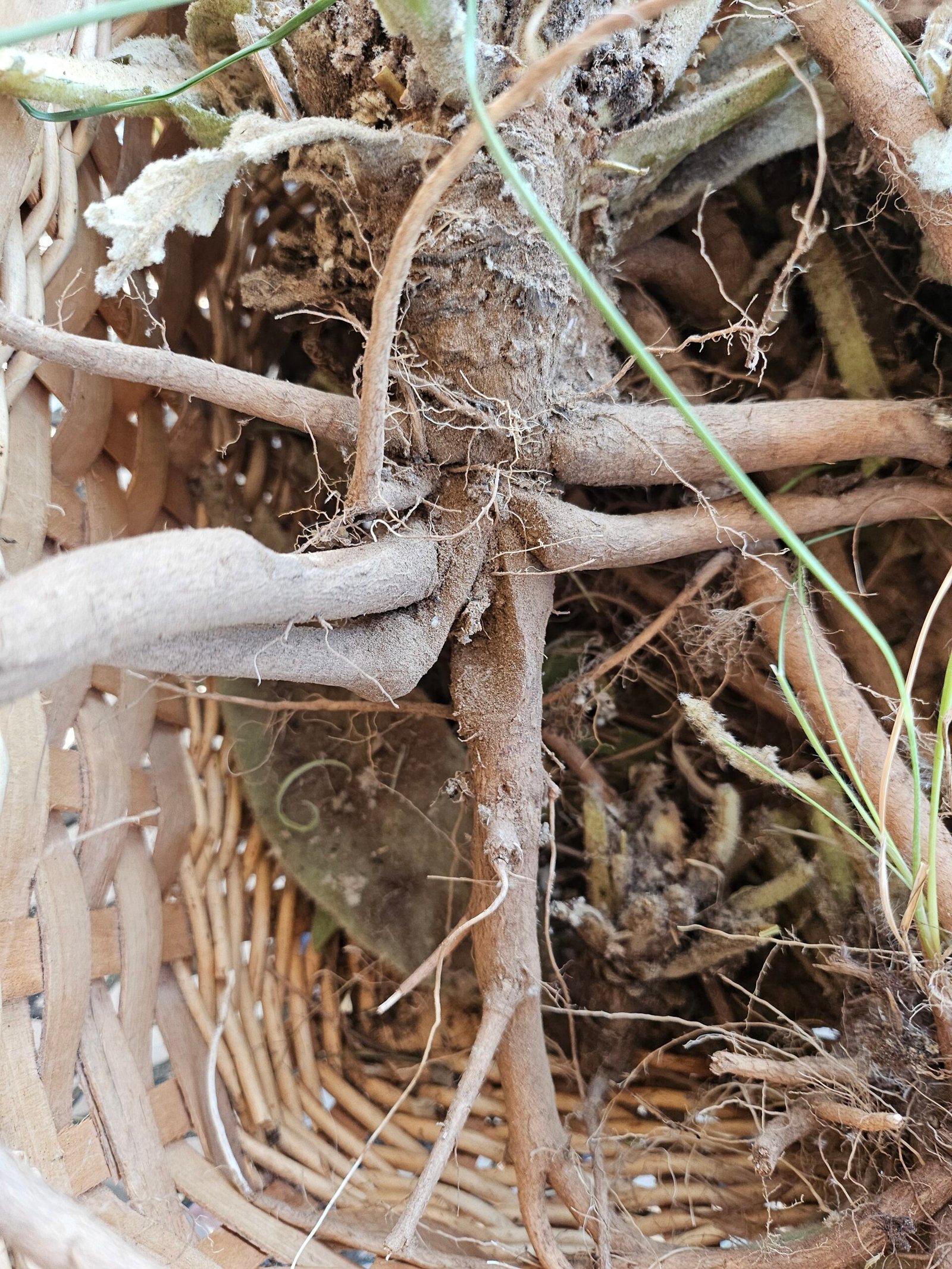
Mullein roots are a tap-root system, so they have a thicker, main root that grows straight down, and then smaller roots grow horizontally from the main root. Once you’ve loosened the soil around the roots, grab the base of your plant and kinda give it a wiggle back-and-forth to loosen it more. At this point, I stick my fingers down into the dirt and try to gently pull and wiggle the root system so that I can find the horizontal roots as well. Then, gently pull, loosening soil as needed to get it all. Easy-peasy!
As you can see from this pic, the roots can be fairly thick and long, so don’t rush it. Gentle patience = quicker removal with more roots. I harvested about 12-13 Mullein plant roots in about 30 minutes, so it’s not too time consuming if you’re patient and gentle. Also if there’s any plant remaining above ground, like leaves, I do a quick snip, after I’ve pulled the roots, before bringing them inside to clean. And today was a true testament as to why…the last plant I was harvesting ended up being covered in fire ants! These stinging little monsters covered my arms, and feet, while I was working. Rarrrrrr (that’s my mean, mad, momma-bear growl)!!! 😂
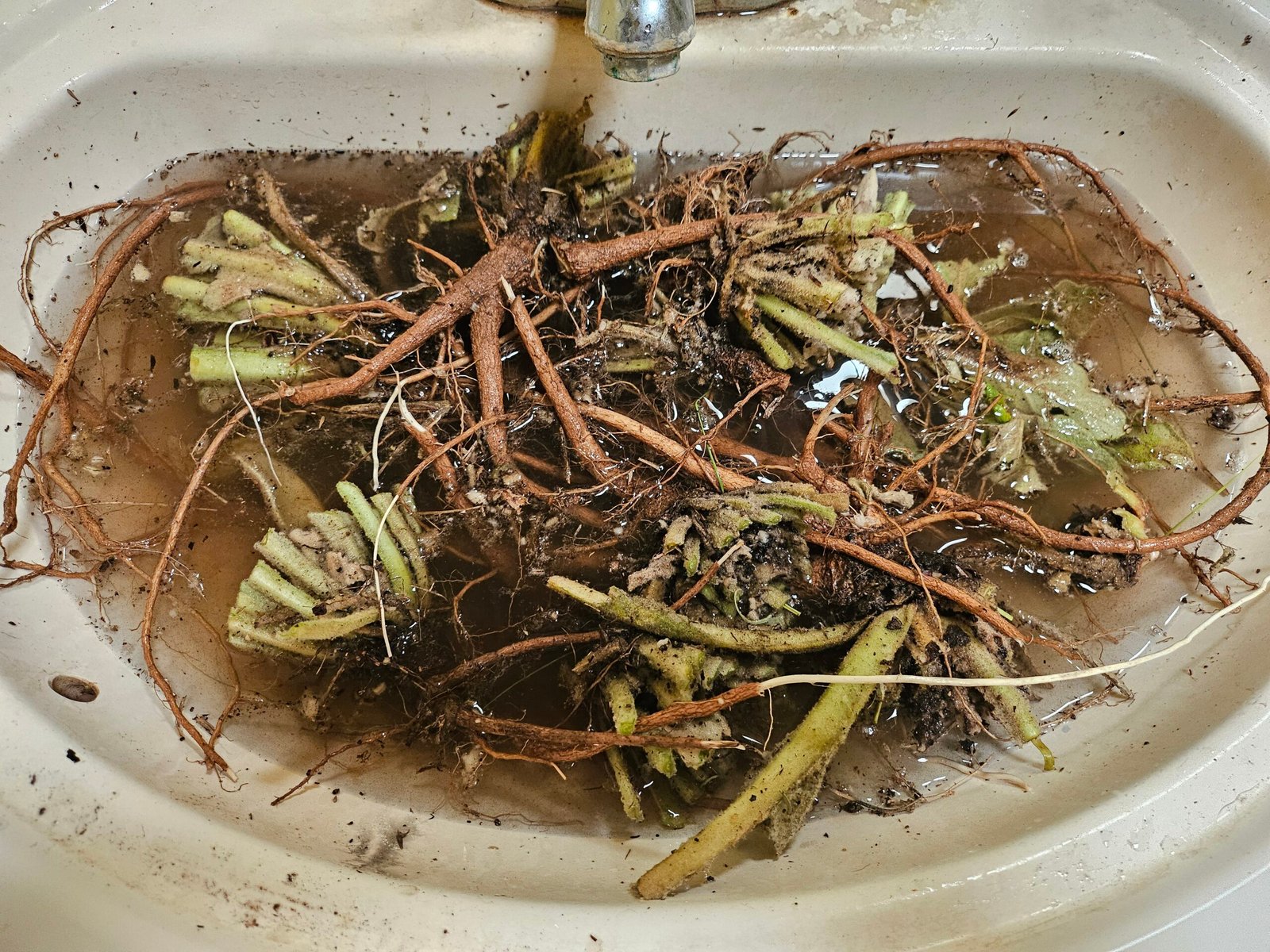
So, now that I’ve gathered the roots from my selected 1st year Mullein plants, it’s time to wash and scrub them. Unlike the leaves and flowers that usually aren’t really washed, the roots definitely need to be. In fact, they need to be scrubbed to remove all the dirt and other material that may be on them (like fire ants!). Once scrubbed clean, there are a few options depending on how you want to use/store them. I am going to make a bit of decoction for my own use, and then make some extract, and dry the rest for later use as dried herbs, extracts and/or decoctions.
Now, it’s time to get busy chopping the roots. It is best to use the roots if they are already sliced/chopped thinly. If drying to save for later, I prefer to dry them in manageable pieces that can easily be made into tea, extract, or a decoction later. (BTW, a decoction is basically boiling the roots in water for several hours to extract the medicinal benefits, and then storing in the fridge for use within a couple days. Decoctions are mainly done on roots or woody stems that are thicker to penetrate.)
Once they’re cut up, store them in a clear jar in a cool, dark area until you’re ready to use. Me, personally, I have a little boiling right now for a decoction, some infusing in glycerin for extracts (4-6 weeks), and some drying.
So with all that said, you may be asking…Why and What benefits does Mullein root serve? For me, it’s been a lifesaver that enables me to move! It’s known to aid in lower back pain, sciatica and nerve-related discomfort, spinal dryness and compression, and recovery from physical trauma. I broke a lumbar bone in a car wreck over 30 years ago that pinched my sciatica causing a loss of feeling in my left leg (now healed), totaled a Harley that busted my ribs and punctured a lung 20 years ago, have a bulging lumbar disc, and now frequently undergo spinal injections and ablations every year. Needless to say, I live with some major back pains ranging from my neck down to my tailbone (that I’ve also broken a few times). Mullein root has been a lifesaver that enables me to continue to stand erect versus being hunched over in pain! Any more questions?? Wish me luck tomorrow AM!
~ Ang ✌️♥️
Leave a Reply